
Fitzen: Simplifying Personalized Fitness Journeys with an Engaging Experience — A UX Case Study
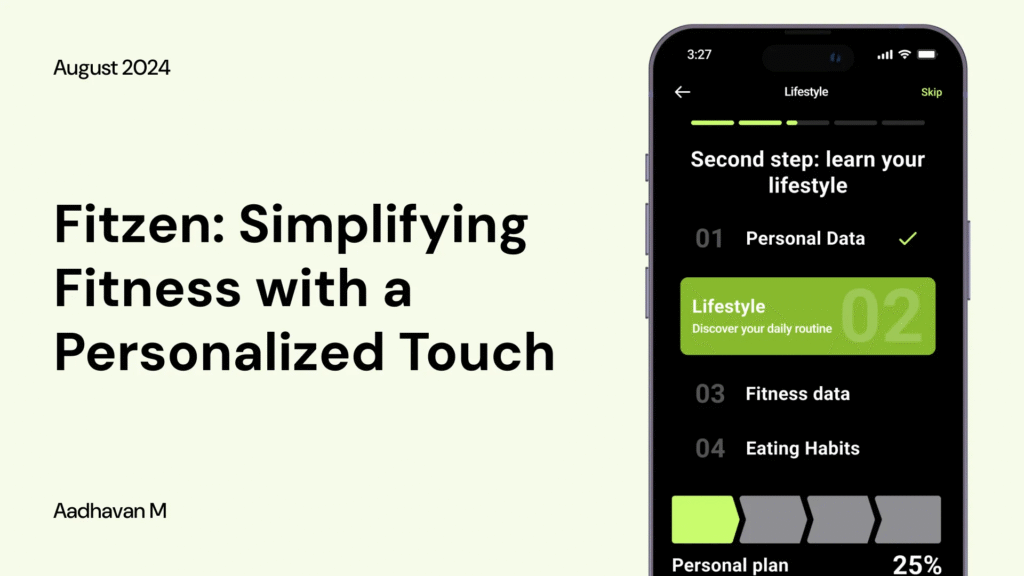
Achieving your fitness goals shouldn’t feel like solving a puzzle.
For many, the road to better health is filled with trial-and-error — picking diets, guessing workout routines, and juggling busy schedules. The result? Frustration, inconsistency, and often giving up before results appear.
Fitzen was created to change that. By using smart onboarding and personalized recommendations, it transforms the chaos of fitness planning into a clear, actionable path. Whether it’s nutrition, exercise, or lifestyle habits, Fitzen adapts to you, making your health journey simple, effective, and achievable.
Introducing Fitzen: Your Fitness Journey Made Simple!
Say goodbye to guesswork and frustration. Fitzen is designed to streamline your health and fitness journey by personalizing every step — from workouts to meal plans — tailored to your goals and lifestyle. With an intuitive onboarding experience, Fitzen collects the right information to craft a fitness plan that works for you, not against you.
What does Fitzen aim to achieve?
Through thoughtful research, user-centric design, and continuous refinement, Fitzen was built to take the complexity out of fitness, helping you focus on what really matters — becoming your best self.
Transforming Fitness Goals into Reality with Personalized Health Plans and Seamless User Experience
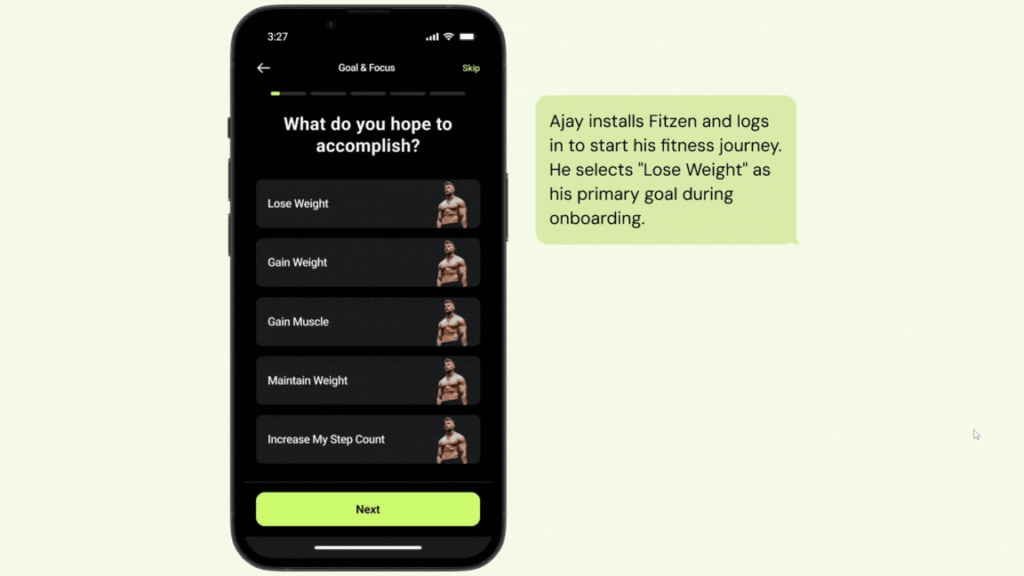
Meet Ajay, a 35-year-old software developer, struggled to maintain a healthy lifestyle amidst work deadlines and family duties. Fitzen transformed his routine with personalized workouts, tailored nutrition plans, and an intuitive interface, helping him achieve his fitness goals effortlessly.
The Fitzen Experience: Redefining Fitness, One Personalized Plan at a Time
Fitzen simplifies fitness journeys with personalized plans tailored to your lifestyle, eliminating barriers to consistency. It empowers users to focus on their goals and enjoy becoming their best selves.
1. How Progress Bars Make Onboarding Clear and Stress-Free?
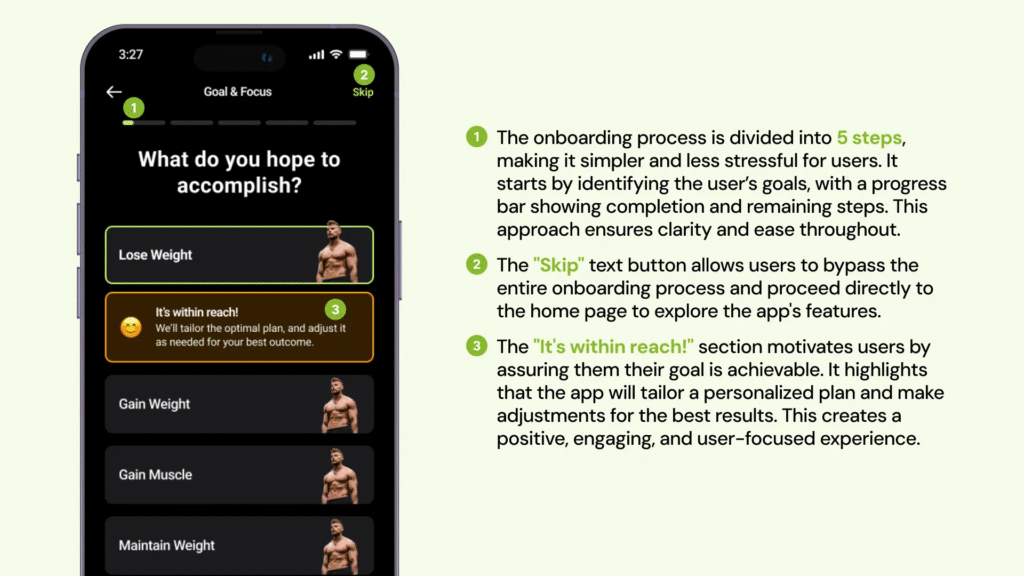
Building on modern app design principles, Fitzen’s five-step progress bar creates a clear and stress-free onboarding experience. Users can track progress, define fitness goals, and understand what’s left to complete. The “Skip” option adds flexibility, allowing users to jump directly into the app. This approach ensures a balance of clarity, engagement, and efficiency.
2. How a Step-by-Step Approach Creates a Truly Personalized Fitness Plan?
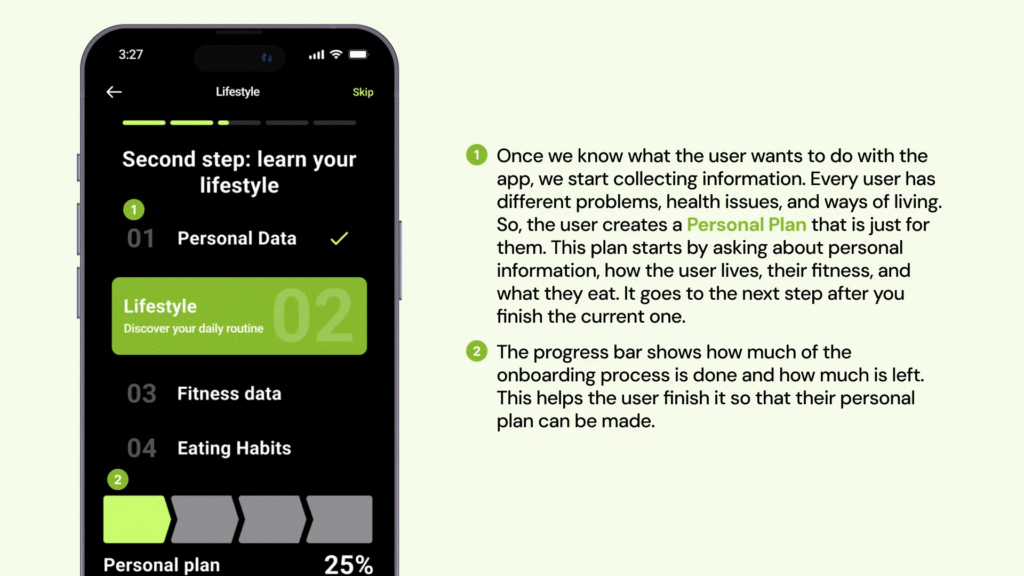
Leveraging a user-first approach, I crafted a 4-step onboarding process for Fitzen to deliver personalized fitness plans. By collecting data on personal details, routines, fitness habits, and diet, the process ensures a tailored experience. A progress bar keeps users motivated, offering clear visual feedback on their journey. This structured flow simplifies onboarding, making personalization seamless and engaging.
3. How Progress Indicators on Home Page Drive Onboarding Completion?
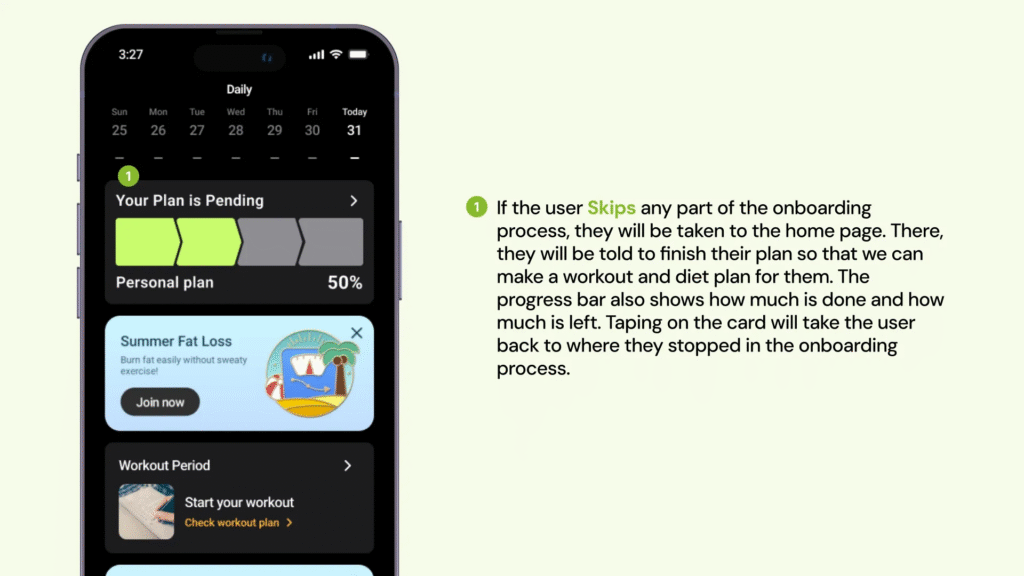
Drawing from user-centric designs, Fitzen’s progress indicator card on the home page keeps users engaged with onboarding. If steps are skipped, a “Your Plan is Pending” card with a completion percentage gently prompts users to finish. The card is interactive, letting users tap to resume seamlessly. This approach ensures a smooth, motivating experience while guiding users to complete their personalized plan.
Crafting Fitzen: Critical Decisions Behind a Personalized Fitness Experience
Key design choices turned Fitzen into a personalized, user-friendly fitness app. Features like step-by-step onboarding and goal-focused customization make fitness journeys simple, engaging, and effective.
1. Why a Clear Progress Bar Became Central to Fitzen’s Onboarding Flow?
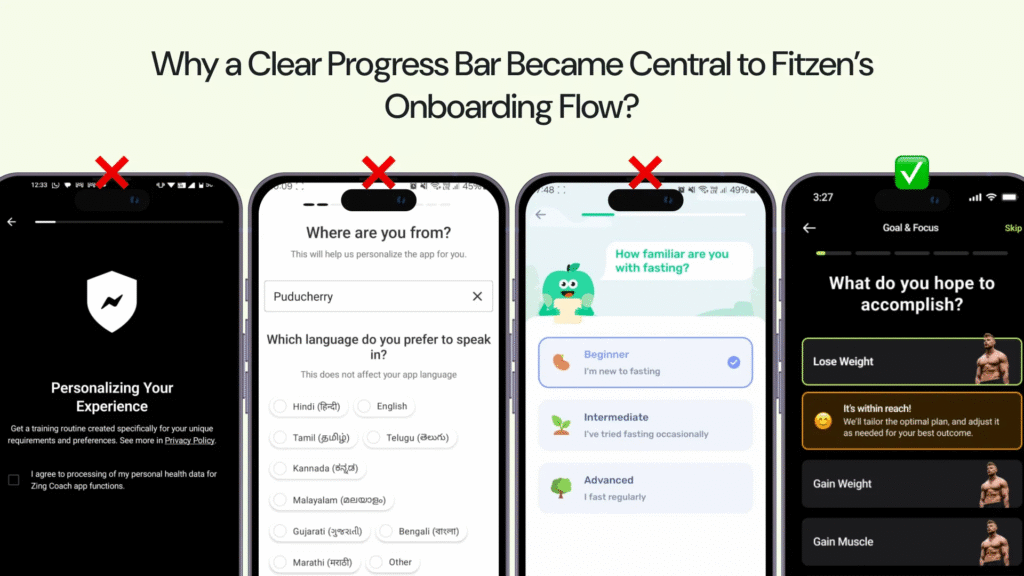
Realizing that a continuous progress bar felt overwhelming during early testing, I opted for a five-step onboarding process: Goal & Focus, Personal Data, Lifestyle, Fitness Data, and Eating Habits. This structured approach simplifies tasks into manageable steps, reducing stress for users. By focusing on clarity and engagement, the flow ensures critical data is collected while keeping the experience intuitive and goal-oriented.
2. Why Breaking Down Steps Revolutionized Fitzen’s Onboarding Flow?
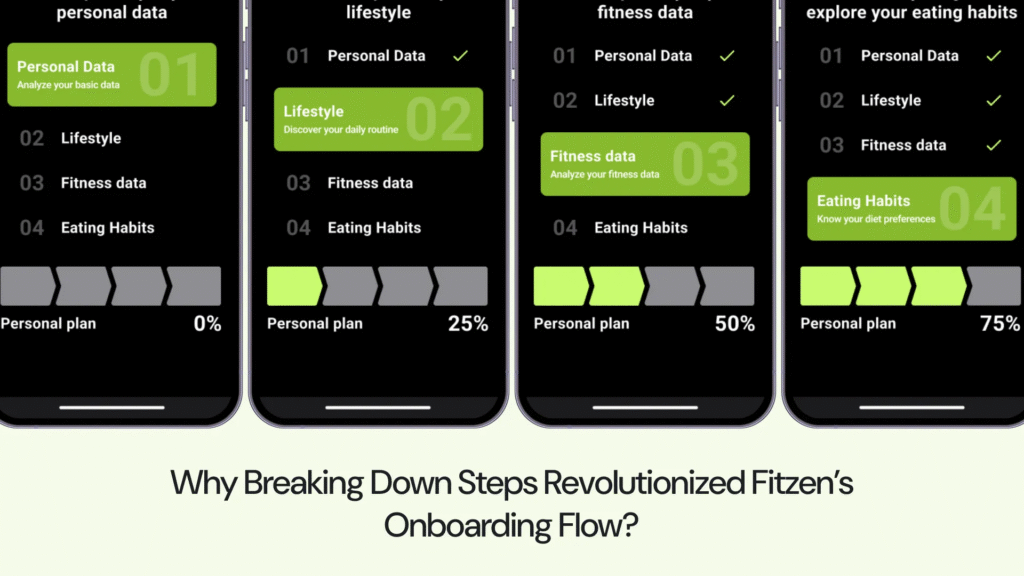
Understanding that a continuous progress bar lacked clarity, I redesigned onboarding into four distinct steps: Personal Data, Lifestyle, Fitness Data, and Eating Habits. This approach simplifies data collection, reduces stress, and provides a clear sense of progress. User feedback showed that focusing on one step at a time made onboarding more engaging and achievable, resulting in a personalized and effective fitness plan.
3. How User-Centered Choices Shaped Fitzen’s Focus Areas Screen?
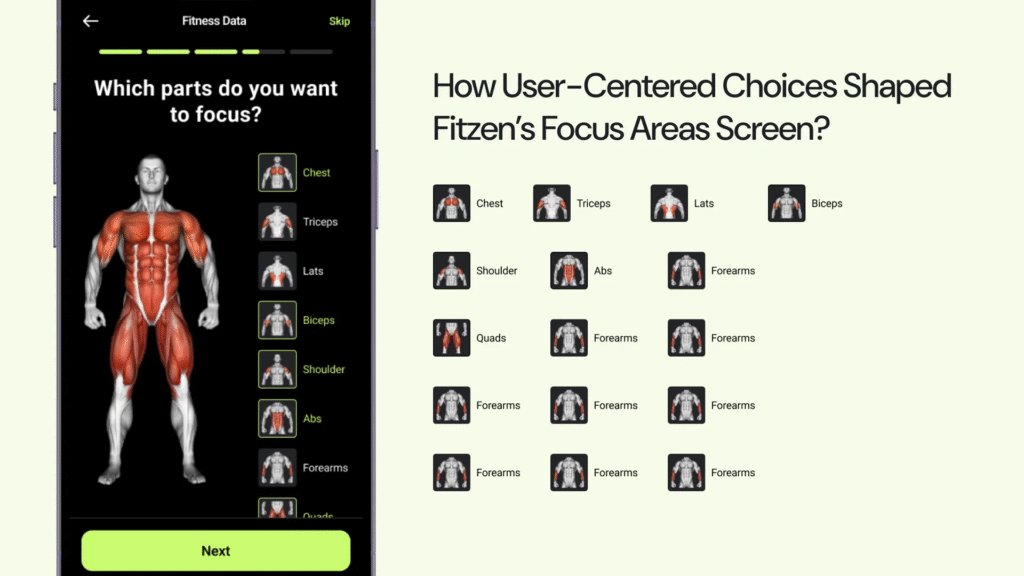
Noticing that a generic workout planning approach lacked motivation for users, I introduced the “Which parts do you want to focus?” screen. This feature lets users choose specific goals, like targeting their chest, biceps, or abs, offering greater control and customization. Feedback showed users appreciated this personalized approach, making Fitzen more effective and aligned with their unique fitness aspirations.
4. Why Strategic Placement Made Fitzen’s Progress Bar More Impactful?
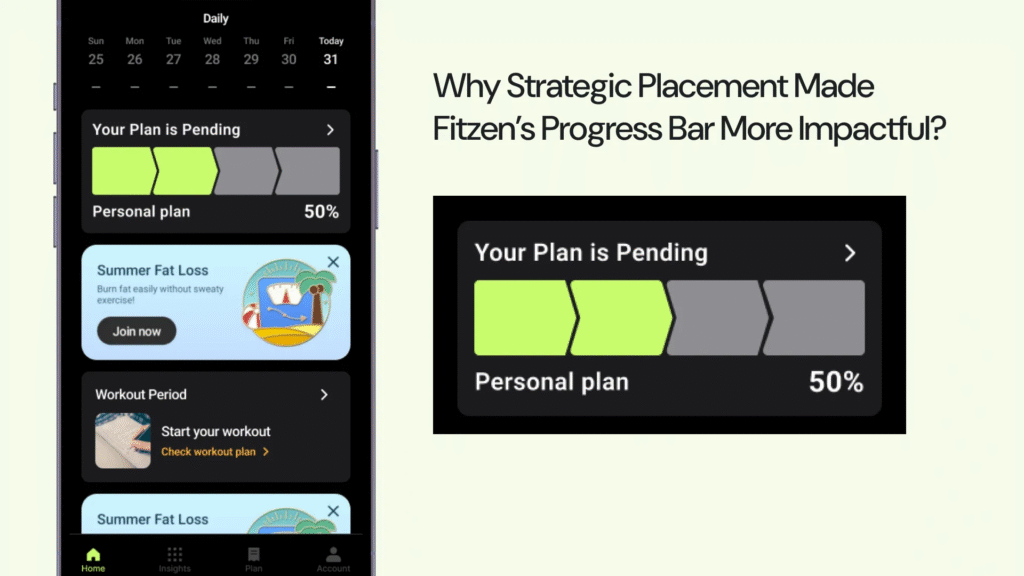
Identifying the need for better visibility, I placed the Personal Plan progress bar at the top of the home screen to make it a focal point. This created a visual cue that motivates users and keeps their goals in focus. Feedback showed this strategic placement made the app more engaging, reinforcing the importance of completing their plan while ensuring progress tracking is always accessible.
Designing Fitzen: How Thoughtful Choices Turned Fitness Planning into a Seamless Experience
Throughout the design process, I effectively utilized Figma to enhance efficiency and ensure consistency across the design.
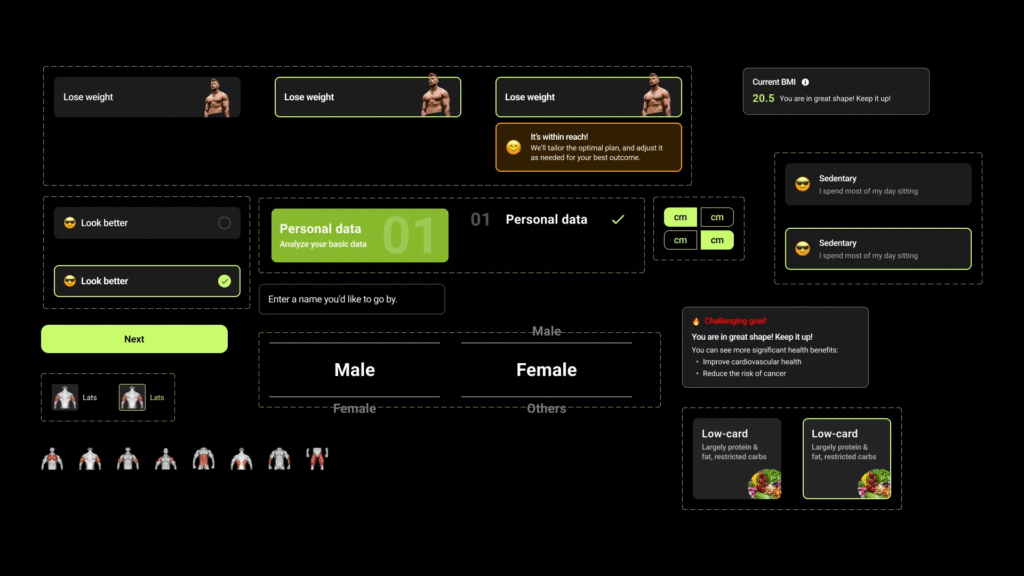
By applying these techniques, I delivered a design that is user-friendly, visually consistent, and highly efficient.
Designing Fitzen: A Journey to Simplify Fitness and Empower Everyday Users
After analyzing the problem statement, I began with competitive research to gain insights and inspiration for Fitzen’s design. By studying existing fitness apps, I identified key features, user flows, and pain points, which helped shape the onboarding process and customization options. This research guided my decisions to create a more tailored and engaging user experience.
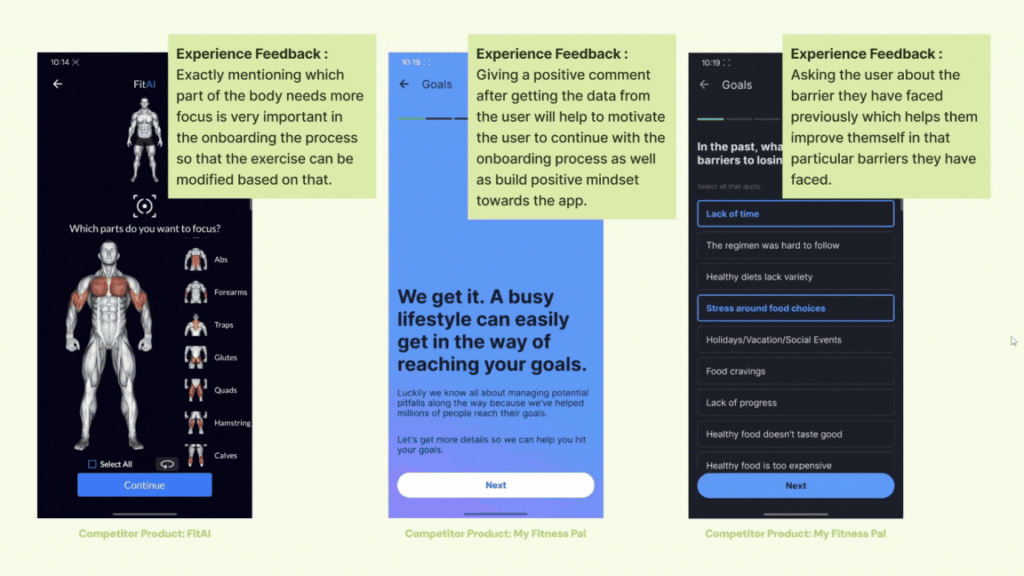
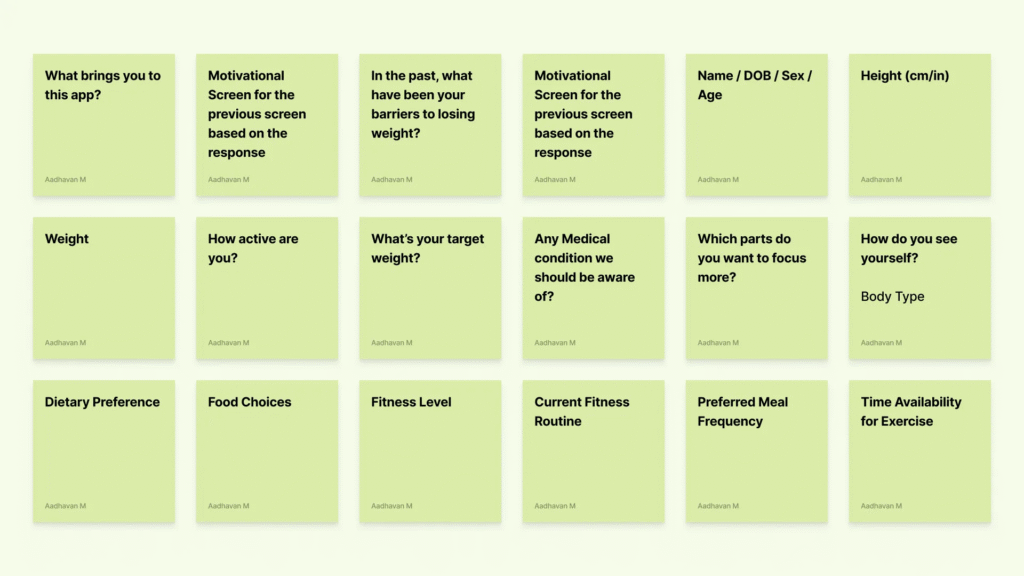
After completing competitor research and gathering design inspiration, I mapped out the user flow for the app. This process involved identifying key steps, such as onboarding questions, motivational screens, and personalized inputs like fitness goals, dietary preferences, and activity levels. The flow ensured a seamless experience tailored to user needs and insights derived from my research.
Following the user flow mapping, I began working on the design phase, integrating insights from competitor research and user needs. This process brought the user journey to life, resulting in the final solution you’ve seen above. The design focused on creating a seamless, personalized, and visually engaging experience for users.
Behind Fitzen’s Design: Key Takeaways in Creating Seamless Fitness Journeys
Designing Fitzen highlighted the importance of aligning with user needs, from tailored plans to simplified onboarding. This experience honed my skills and deepened my understanding of creating empowering, user-focused solutions.
The Learning: I discovered the value of starting with a strategic approach, using competitor UX analysis to gain insights into existing solutions and uncover improvement areas. This method helped me develop a more focused and targeted design strategy, avoiding the overwhelm of starting from scratch.
The Learning: I realized that prioritizing improvements over building everything from scratch was more efficient. By leveraging existing knowledge and innovations, I delivered relevant and impactful designs while streamlining development efforts.
The Learning: Through competitor analysis, I learned to identify their strengths, weaknesses, and user experiences. This approach allowed me to craft a product that stood out, providing a superior and differentiated solution tailored to user needs.
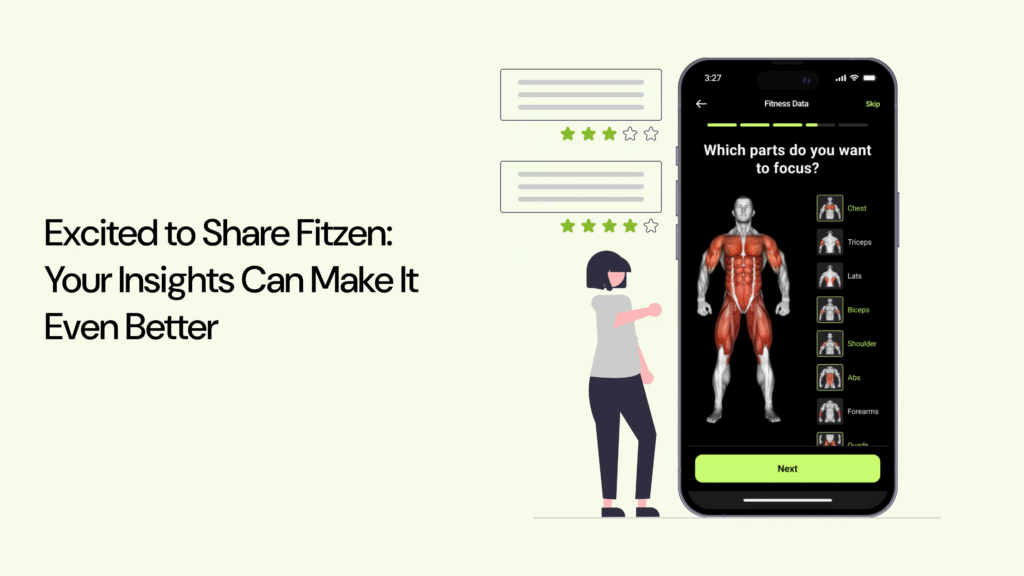
Excited to Share Fitzen: Your Insights Can Make It Even Better
Fitzen is my journey toward designing a personalized and seamless fitness app, and I’d love to hear your thoughts to make it even more impactful.
Thank you so much for your time and thoughts! If you liked the project or have suggestions, connect with me via DM on social media ❤ — LinkedIn
Fitzen: Simplifying Personalized Fitness Journeys with an Engaging Experience — A UX Case Study
Achieving your fitness goals shouldn’t feel like solving a puzzle.
For many, the road to better health is filled with trial-and-error — picking diets, guessing workout routines, and juggling busy schedules. The result? Frustration, inconsistency, and often giving up before results appear.
Fitzen was created to change that. By using smart onboarding and personalized recommendations, it transforms the chaos of fitness planning into a clear, actionable path. Whether it’s nutrition, exercise, or lifestyle habits, Fitzen adapts to you, making your health journey simple, effective, and achievable.
Introducing Fitzen: Your Fitness Journey Made Simple!
Say goodbye to guesswork and frustration. Fitzen is designed to streamline your health and fitness journey by personalizing every step — from workouts to meal plans — tailored to your goals and lifestyle. With an intuitive onboarding experience, Fitzen collects the right information to craft a fitness plan that works for you, not against you.
What does Fitzen aim to achieve?
Through thoughtful research, user-centric design, and continuous refinement, Fitzen was built to take the complexity out of fitness, helping you focus on what really matters — becoming your best self.
Transforming Fitness Goals into Reality with Personalized Health Plans and Seamless User Experience
Meet Ajay, a 35-year-old software developer, struggled to maintain a healthy lifestyle amidst work deadlines and family duties. Fitzen transformed his routine with personalized workouts, tailored nutrition plans, and an intuitive interface, helping him achieve his fitness goals effortlessly.
The Fitzen Experience: Redefining Fitness, One Personalized Plan at a Time
Fitzen simplifies fitness journeys with personalized plans tailored to your lifestyle, eliminating barriers to consistency. It empowers users to focus on their goals and enjoy becoming their best selves.
1. How Progress Bars Make Onboarding Clear and Stress-Free?
Building on modern app design principles, Fitzen’s five-step progress bar creates a clear and stress-free onboarding experience. Users can track progress, define fitness goals, and understand what’s left to complete. The “Skip” option adds flexibility, allowing users to jump directly into the app. This approach ensures a balance of clarity, engagement, and efficiency.
2. How a Step-by-Step Approach Creates a Truly Personalized Fitness Plan?
Leveraging a user-first approach, I crafted a 4-step onboarding process for Fitzen to deliver personalized fitness plans. By collecting data on personal details, routines, fitness habits, and diet, the process ensures a tailored experience. A progress bar keeps users motivated, offering clear visual feedback on their journey. This structured flow simplifies onboarding, making personalization seamless and engaging.
3. How Progress Indicators on Home Page Drive Onboarding Completion?
Drawing from user-centric designs, Fitzen’s progress indicator card on the home page keeps users engaged with onboarding. If steps are skipped, a “Your Plan is Pending” card with a completion percentage gently prompts users to finish. The card is interactive, letting users tap to resume seamlessly. This approach ensures a smooth, motivating experience while guiding users to complete their personalized plan.
Crafting Fitzen: Critical Decisions Behind a Personalized Fitness Experience
Key design choices turned Fitzen into a personalized, user-friendly fitness app. Features like step-by-step onboarding and goal-focused customization make fitness journeys simple, engaging, and effective.
1. Why a Clear Progress Bar Became Central to Fitzen’s Onboarding Flow?
Realizing that a continuous progress bar felt overwhelming during early testing, I opted for a five-step onboarding process: Goal & Focus, Personal Data, Lifestyle, Fitness Data, and Eating Habits. This structured approach simplifies tasks into manageable steps, reducing stress for users. By focusing on clarity and engagement, the flow ensures critical data is collected while keeping the experience intuitive and goal-oriented.
2. Why Breaking Down Steps Revolutionized Fitzen’s Onboarding Flow?
Understanding that a continuous progress bar lacked clarity, I redesigned onboarding into four distinct steps: Personal Data, Lifestyle, Fitness Data, and Eating Habits. This approach simplifies data collection, reduces stress, and provides a clear sense of progress. User feedback showed that focusing on one step at a time made onboarding more engaging and achievable, resulting in a personalized and effective fitness plan.
3. How User-Centered Choices Shaped Fitzen’s Focus Areas Screen?
Noticing that a generic workout planning approach lacked motivation for users, I introduced the “Which parts do you want to focus?” screen. This feature lets users choose specific goals, like targeting their chest, biceps, or abs, offering greater control and customization. Feedback showed users appreciated this personalized approach, making Fitzen more effective and aligned with their unique fitness aspirations.
4. Why Strategic Placement Made Fitzen’s Progress Bar More Impactful?
Identifying the need for better visibility, I placed the Personal Plan progress bar at the top of the home screen to make it a focal point. This created a visual cue that motivates users and keeps their goals in focus. Feedback showed this strategic placement made the app more engaging, reinforcing the importance of completing their plan while ensuring progress tracking is always accessible.
Designing Fitzen: How Thoughtful Choices Turned Fitness Planning into a Seamless Experience
Throughout the design process, I effectively utilized Figma to enhance efficiency and ensure consistency across the design.
By applying these techniques, I delivered a design that is user-friendly, visually consistent, and highly efficient.
Designing Fitzen: A Journey to Simplify Fitness and Empower Everyday Users
After analyzing the problem statement, I began with competitive research to gain insights and inspiration for Fitzen’s design. By studying existing fitness apps, I identified key features, user flows, and pain points, which helped shape the onboarding process and customization options. This research guided my decisions to create a more tailored and engaging user experience.
After completing competitor research and gathering design inspiration, I mapped out the user flow for the app. This process involved identifying key steps, such as onboarding questions, motivational screens, and personalized inputs like fitness goals, dietary preferences, and activity levels. The flow ensured a seamless experience tailored to user needs and insights derived from my research.
Following the user flow mapping, I began working on the design phase, integrating insights from competitor research and user needs. This process brought the user journey to life, resulting in the final solution you’ve seen above. The design focused on creating a seamless, personalized, and visually engaging experience for users.
Behind Fitzen’s Design: Key Takeaways in Creating Seamless Fitness Journeys
Designing Fitzen highlighted the importance of aligning with user needs, from tailored plans to simplified onboarding. This experience honed my skills and deepened my understanding of creating empowering, user-focused solutions.
The Learning: I discovered the value of starting with a strategic approach, using competitor UX analysis to gain insights into existing solutions and uncover improvement areas. This method helped me develop a more focused and targeted design strategy, avoiding the overwhelm of starting from scratch.
The Learning: I realized that prioritizing improvements over building everything from scratch was more efficient. By leveraging existing knowledge and innovations, I delivered relevant and impactful designs while streamlining development efforts.
The Learning: Through competitor analysis, I learned to identify their strengths, weaknesses, and user experiences. This approach allowed me to craft a product that stood out, providing a superior and differentiated solution tailored to user needs.
Excited to Share Fitzen: Your Insights Can Make It Even Better
Fitzen is my journey toward designing a personalized and seamless fitness app, and I’d love to hear your thoughts to make it even more impactful.
Thank you so much for your time and thoughts! If you liked the project or have suggestions, connect with me via DM on social media ❤ — LinkedIn