
User Research
Conducted 1-on-1 interviews with small business owners to uncover friction in their expense workflows – insights led to automation features that reduced manual entry time and eliminated the need for duplicate record-keeping.
In my Expenzo project, I conducted detailed primary research by interviewing a diverse group of small business owners across sectors like offset printing (Ravi Offset), hostel businesses, car travel operators, IT service providers, and manufacturing (control valve).
What I did:
– Current expense tracking habits.
– Use of tools like Excel, Tally, and physical ledgers.
– Monthly GST filing process and related stress points.
– Ravi, who tracked sales and purchases manually for his offset printing business.
– Kumar, a hostel manager who only tracked income tax data once a year.
– Raja, a car rental business owner struggling with receipt misplacement.
– Kalim, an IT services business owner open to automated categorization.
– Hareendran, a traditional valve business owner who was skeptical of automation.
– Most users relied on delayed, manual entry once or twice a month.
– GST filing prep was often last-minute, error-prone, and repetitive.
– Non-technical users preferred a tool that mimicked their existing flow but reduced workload.
Based on these findings, I:
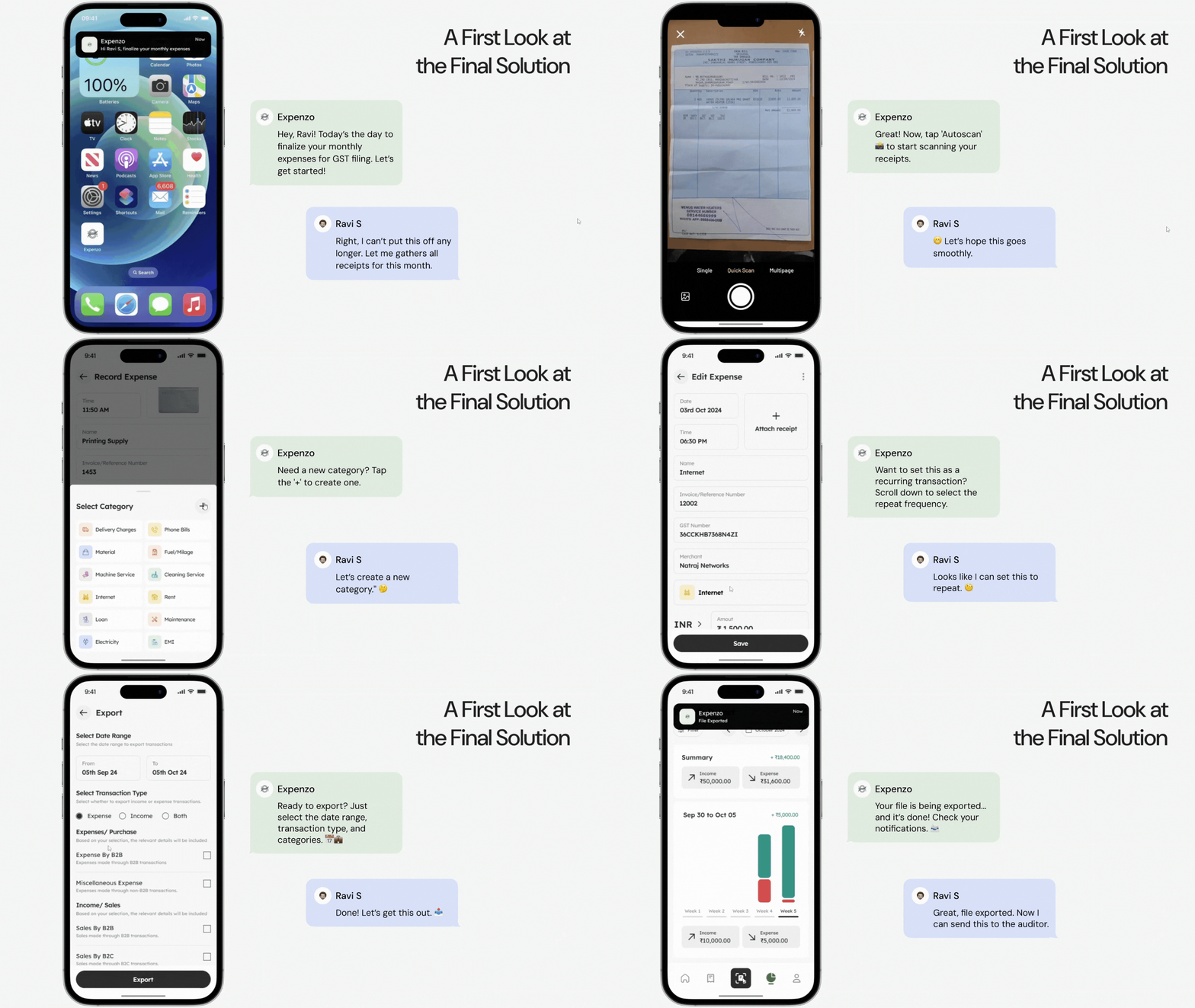
– Receipt scanning to avoid loss and reduce entry time.
– Recurring transaction tagging to avoid repetitive input.
– Easy GST export to replicate their final step of Excel sheet sharing.
These user insights grounded the product vision and ensured that the design was deeply tied to real pain points instead of assumptions.
Case Study: Expenzo Project
Visual Reference:
User Research
Conducted 1-on-1 interviews with small business owners to uncover friction in their expense workflows – insights led to automation features that reduced manual entry time and eliminated the need for duplicate record-keeping.
In my Expenzo project, I conducted detailed primary research by interviewing a diverse group of small business owners across sectors like offset printing (Ravi Offset), hostel businesses, car travel operators, IT service providers, and manufacturing (control valve).
What I did:
– Current expense tracking habits.
– Use of tools like Excel, Tally, and physical ledgers.
– Monthly GST filing process and related stress points.
– Ravi, who tracked sales and purchases manually for his offset printing business.
– Kumar, a hostel manager who only tracked income tax data once a year.
– Raja, a car rental business owner struggling with receipt misplacement.
– Kalim, an IT services business owner open to automated categorization.
– Hareendran, a traditional valve business owner who was skeptical of automation.
– Most users relied on delayed, manual entry once or twice a month.
– GST filing prep was often last-minute, error-prone, and repetitive.
– Non-technical users preferred a tool that mimicked their existing flow but reduced workload.
Based on these findings, I:
– Receipt scanning to avoid loss and reduce entry time.
– Recurring transaction tagging to avoid repetitive input.
– Easy GST export to replicate their final step of Excel sheet sharing.
These user insights grounded the product vision and ensured that the design was deeply tied to real pain points instead of assumptions.
Case Study: Expenzo Project
Visual Reference: